
Article
Your Biggest Procurement Problem Isn’t AI - It’s Leaders Who Don’t Get Data
Automation and AI need more than new software: they need reliable data and leaders who understand its value. Drawing on a specific project experience, Bjoern Frese sets out eight priorities for procurement leaders, from clear data ownership and consistent master data to metadata and daily quality checks. The article explains why data competence belongs at the core of procurement and how practical automation and AI use cases can build on that foundation.
- Data literacy
- Leadership
- Automation & AI
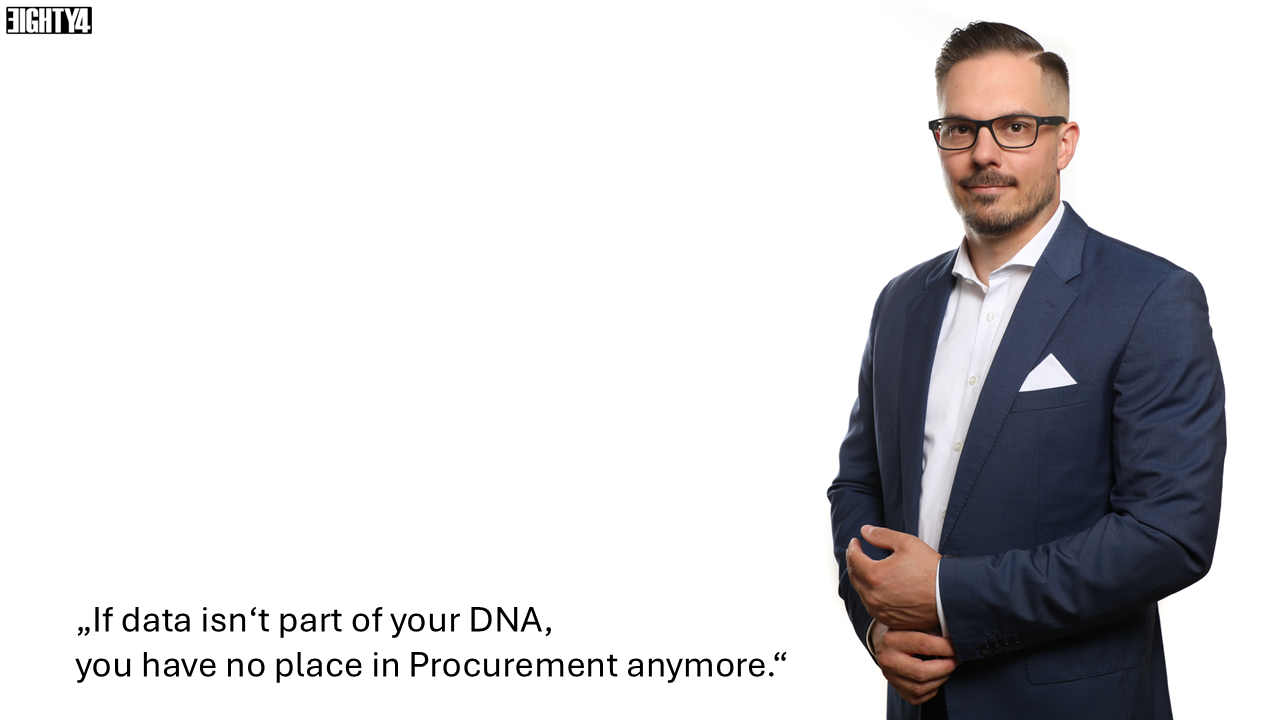
This story may sound a little disturbing, but it really happened.
In one of my projects, we needed to bring in a dedicated resource for procurement master data. Nothing exotic. No moonshot. Just someone to own and structure the issues around procurement master data and build an efficient interface between Procurement and the other workstreams.
Staffing this role from the project team wasn’t possible, so the request had to go through the procurement organisation. In theory, a straightforward task: make the case, clarify questions, take a decision.
In practice, it went sideways.
The person in charge openly admitted that he had no idea what master data in Procurement is about, did not understand what I was talking about, was not able to connect the dots and did not understand what the role was about. He didn’t understand why master data mattered, couldn’t connect it to outcomes, and finally rejected the request – explicitly because he didn’t get it.
We could unpack a lot here: role clarity, decision rights, organisational maturity. But the core issue is simpler and more fundamental:
Data.
Twenty years ago, data in procurement was a dry back-office topic. Today, it is the backbone of every serious automation and AI initiative. If you don’t understand your data, you will not automate at scale. If you don’t invest in your data, you will not get meaningful AI outcomes. It’s that simple.
Data can no longer be treated as a niche concern for “the system people”. It needs to become part of your organisational DNA, especially in procurement.
So what does that mean in practice?
Here are the most important things every business leader – and especially every CPO and Head of Procurement – needs to implement and put to work right now:
- Make data a leadership topic, not an IT side project. Data quality, accessibility and structure must sit on the leadership agenda. If your steering committees talk about savings but never about data readiness, you are not serious about automation or AI.
- Assign clear ownership for procurement data. Define who owns which data objects (suppliers, materials, contracts, spend, risks, etc.). Appoint data owners and data stewards. Without ownership, data quality is always “someone else’s problem”.
- Create a single source of truth for core master data. Supplier, material and contract data must be consistent across systems. That does not mean one giant tool solves everything, but it does mean a defined architecture, clear primary systems and robust interfaces.
- Standardise structures and taxonomies. No AI model will save you from chaotic structures. You need harmonised supplier categories, material groups, payment terms, incoterms, contract types and so on. Start boring, start small – but start.
- Treat transactional data as a strategic asset. Every PO, invoice, contract change, approval step and exception throws off data. Capture it cleanly. Avoid free-text where structured fields are needed. This is the raw material for automation, analytics and AI.
- Invest in metadata and context - not just the “what”, but the “why”. Good data doesn’t just say what was bought from which supplier at what price. It also captures the business purpose, the category, the risk level, the demand driver. That context is exactly what AI needs to learn from.
- Embed data quality into daily work, not as a one-off “cleanup project”. Data quality checks must be part of standard processes: supplier onboarding, material creation, contract signing, PO creation, invoice posting. Define KPIs (e.g., completeness, duplicates, classification accuracy) and manage them like you manage savings.
- Build automation and AI use cases on top of this foundation - not instead of it. Start with concrete use cases (e.g., automated spend classification, risk scoring, contract clause extraction, recommendation engines for suppliers). But always link them back to your data model and governance. Every use case should either consume good data or improve it.
If you want automation and AI in procurement that actually work in the real world, not just in glossy slideware, you need to start with data.
Data, automation and AI are not “nice to have” topics. They are drivers of hard business value: margin, cost, speed, risk, resilience.
If you don’t have that engine in place, build it.
Not tomorrow. Not “after the next system rollout”.
You start by treating data as a core capability of your procurement function. And then you put it to work.
You don’t have it? Have it.
Originally published on LinkedIn. The date refers to the publication of the original article.